
Key Takeaways
- Faith-based organizations face distinct payroll challenges, including clergy compensation and tax compliance.
- Implementing digital payroll solutions can enhance efficiency and accuracy.
- Cloud-based systems offer scalability and remote access, beneficial for organizations with multiple locations.
- Automated payroll processes reduce errors and ensure timely payments.
- Choosing the right payroll solution requires assessing organizational needs and available resources.
Table of Contents
- Introduction
- Unique Payroll Challenges in Faith-Based Organizations
- Benefits of Digital Payroll Solutions
- Cloud-Based Payroll Systems
- Automation in Payroll Processing
- Case Study: Archdiocese of Miami
- Steps to Implementing a New Payroll System
- Conclusion
Faith-based organizations frequently encounter specialized payroll management needs. From unique tax compliance requirements to clergy-specific compensation considerations, these organizations must navigate a landscape far more nuanced than that of standard businesses. By adopting smarter systems such as church payroll software, these organizations can reduce administrative hurdles and devote more energy to their core mission.
Faith-based groups, whether churches, synagogues, or faith-run nonprofit entities, benefit greatly from efficient payroll systems. Not only do these tools help ensure timely and accurate payroll operations, but they also play a crucial role in maintaining compliance with federal, state, and local regulations. This streamlining is vital for organizations looking to invest more fully in their faith-driven initiatives.
Many faith-based institutions serve across multiple regions, making cloud-based systems an appealing option. They enable leaders to securely access payroll information from remote locations, a necessity for geographically dispersed staff or congregations.
By implementing advanced digital tools, organizations can also improve transparency and accuracy, reduce human error, and free up staff to focus on more impactful work. With these resources at their disposal, faith-based groups can focus less on administrative complexity and more on delivering crucial services to their communities and congregations, fostering greater impact and efficiency within their missions.
Unique Payroll Challenges in Faith-Based Organizations
Payroll management for faith-based organizations often requires specialized approaches. Clergy members may qualify for unique tax exemptions, like housing allowances, which must be properly documented and reported to comply with IRS guidelines. At the same time, most organizations also employ lay staff, each with their own payroll requirements under labor laws. This dual responsibility makes accuracy and compliance both challenging and essential. For more in-depth analysis of these legal frameworks, Church Law & Tax provides extensive resources.
Benefits of Digital Payroll Solutions
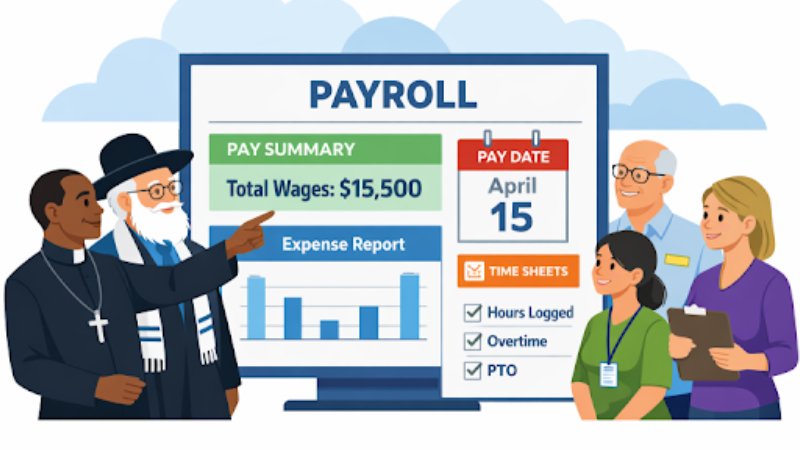
Transitioning from manual payroll management to digital solutions brings immediate dividends. Modern payroll systems automate calculations for withholdings, tax payments, and benefit allocations. This automation reduces the risk of costly errors and missed deadlines. Moreover, these systems often include reporting tools to track expenses, review payroll summaries, and easily prepare the necessary documents for audits. Accuracy, transparency, and compliance become embedded in the payroll process.
Digital payroll tools can also integrate seamlessly with other accounting systems, making it easier for finance teams to manage budgets and resources. This interoperability enables leadership to access up-to-date financial data and make informed decisions.
Cloud-Based Payroll Systems
For organizations that operate in multiple locations or have off-site staff, cloud-based payroll systems are a transformative option. Such systems enable access from anywhere, provide real-time updates, enable centralized data management, and enhance security. Cloud solutions are especially useful for organizations that are growing or consolidating regional offices. With role-based permissions, administrators ensure only authorized personnel view sensitive payroll information.
Additionally, cloud payroll solutions often support automated updates to regulatory changes, keeping organizations consistently compliant.
Automation in Payroll Processing
Automation is central to modern payroll systems. Direct deposit, auto-generated tax forms, and scheduled payments help organizations avoid late or incorrect payroll. Automation also streamlines back-end processes, including regulatory reporting and benefits administration. By taking routine tasks out of staff members ‘ hands, organizations can better focus on supporting their members and expanding outreach programs.
The right payroll platform ensures compliance through continuous monitoring and alerts, significantly reducing exposure to penalties or errors. In this way, automation becomes a strategic asset for any faith-based entity seeking sustainable, ethical financial practices.
Case Study: Archdiocese of Miami
In a bid to address the challenges posed by a decentralized, fragmented payroll system, the Archdiocese of Miami opted to unify its many parishes, schools, and offices under a single digital payroll platform. The results were quickly felt. Not only did payroll and benefits processing become more streamlined, but risk of error dropped sharply, and compliance improved dramatically. Administrators now have a clear, consolidated view of payroll, making audits and reporting less burdensome and freeing up resources for ministry and outreach.
This case demonstrates that even large, complex faith-based organizations can successfully transition to modern payroll solutions with significant benefits across financial oversight, compliance, and staff satisfaction.
Steps to Implementing a New Payroll System
- Assess Organizational Needs: Begin by evaluating the current payroll structure and identifying areas needing improvement, such as speed, accuracy, compliance, or ease of reporting.
- Research Solutions: Consider available payroll systems tailored to faith-based organizations, weighing factors like scalability, integration capabilities, and cost efficiency.
- Plan Implementation: Develop a step-by-step rollout plan, including timelines, resource requirements, and clear roles for each team member involved in the transition.
- Train Staff: Organize comprehensive training sessions to ensure all relevant staff are comfortable using the new system.
- Monitor and Adjust: Track the new system’s performance closely, gather feedback, and make workflow adjustments as needed to maximize efficiency and minimize disruptions.
Conclusion
The shift toward efficient, digital payroll processes empowers faith-based organizations to overcome unique operational challenges. By embracing automation and cloud-based systems, they can enhance accuracy, ensure compliance with tax and employment laws, and dedicate more attention and budget to spiritual and community missions. As these organizations look to the future, smart payroll solutions will remain a cornerstone of responsible stewardship and organizational health.