
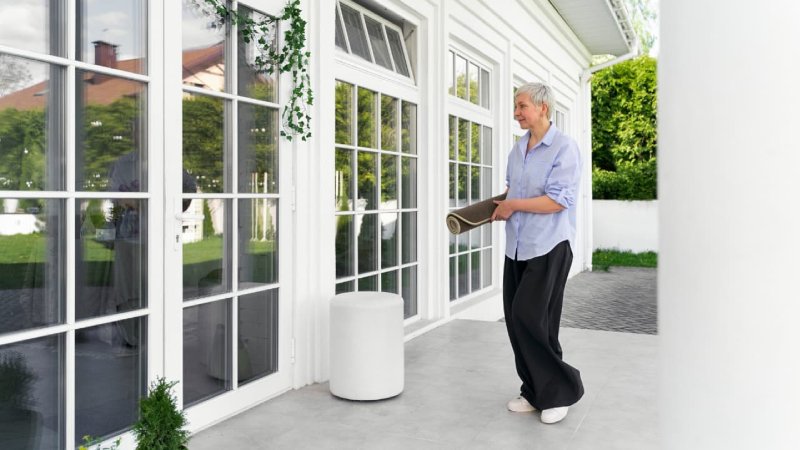
Let’s be honest -when you moved into a home with large windows, you probably felt like you’d won the lottery. All that light, all that space, the way the room just breathes. Fast forward three weeks, and you’re standing in your living room squinting at the sun, your sofa fabric is fading, and your neighbour Dave has accidentally made eye contact with you twice this morning. Large windows are wonderful, but only when you actually know what to do with them.
Most people get it wrong the first time. They hang curtains that don’t cover the full width, buy blinds that look like they belong in a primary school classroom, or just… leave the windows bare and pretend it’s a lifestyle choice. It’s not. It’s avoidance.
The good news is that there’s a straightforward solution that more homeowners are catching on to, and once you see it done well, you won’t understand why you waited this long.
Why Big Windows Break the Normal Rules
Here’s what nobody tells you when you’re buying window treatments -everything that works on a small window starts looking awkward at scale. A Roman blind that looks crisp and elegant on a kitchen window looks like a napkin on a 3-metre patio door. The proportions are just off.
Large windows need something that was designed with their scale in mind. That’s where shutters for house interiors with wide or tall glazing genuinely earn their reputation. They’re built in panels, they’re measured precisely to your window, and they don’t compromise on coverage. There’s no guessing, no bunching, no “we’ll just overlap them a bit and hope for the best.”
And look -they’re not a new idea. Shutters have been around for centuries. The reason they’ve never really gone away is that they work. They just happen to look particularly good right now, which is a bonus.
Start with the Right Type Before Anything Else
A lot of people skip this step and go straight to colour swatches, which is a bit like choosing your wallpaper before you’ve decided which room you’re decorating. The type of shutter matters enormously, especially with large windows.
Panel track shutters are the ones to look at if you’re dealing with wide windows or doors. They slide along a track rather than folding or swinging open, which means you’re not fighting with panels that jut out into the room. For patio doors especially, this is the most practical choice by a significant margin.
Full-height shutters work brilliantly when your window runs floor to ceiling. They give the room a completely finished look -like the shutters were always meant to be there rather than added as an afterthought. This matters more than people realise. A window treatment that looks installed versus one that looks considered are two very different things.
Café style -just covering the lower half -is worth considering in rooms where you want natural light flooding in from above but still need some privacy at eye level. Ground-floor rooms facing the street, mainly.
The Louvre Size Conversation Nobody Has But Should
Right, this sounds more technical than it is. Louvres are just the horizontal slats that you tilt open and closed. And the size of them changes the feel of a room more than most people expect.
For large windows, go bigger. 89mm or 114mm louvres look proportionate against a wide or tall frame. Smaller louvres on a big window end up looking fussy -there are just too many of them, and the eye doesn’t know where to settle. Wider louvres also let in more light when open, which is the whole point of having those lovely big windows in the first place.
Colour Is Where You Can Have a Bit of Fun
The safe choice is white or off-white. It’s safe because it works -it reflects light, it goes with almost everything, and it keeps the window feeling airy rather than heavy.
But safe isn’t always right. If your room has strong tones -deep greens, terracotta, navy -a shutter in a complementary shade can pull everything together in a way that feels intentional and considered. Pale grey shutters in a room with exposed brick, for instance, look genuinely brilliant.
A few customers at bluechipshuttersblinds have gone for custom-painted finishes that match their skirting boards or architraves exactly, and the result is that the shutters look like they were designed with the house rather than added to it. That’s the goal, really.
How to Handle Light Without Losing Your View
This is the part that converts most people. One of the genuinely clever things about shutters -and this applies especially to wider installations -is how much control you get over light without having to choose between privacy and a view.
Split tilt is the option to ask about. It means the top half and bottom half of your louvres can be adjusted separately. So you can tilt the upper louvres to let the sky in and bounce light off the ceiling, while keeping the lower half closed so the world isn’t watching you eat your breakfast. It sounds like a small thing. It genuinely changes how you use a room.
A Word on Layering -Because Shutters and Soft Furnishings Aren’t Rivals
People sometimes worry that adding shutters means their space will feel cold or too structured. That’s not how it plays out in practice. Shutters and curtains can absolutely coexist. A loose linen drape on either side of a shuttered window adds texture and warmth without getting in the way of any of the functionality. The shutters do the serious work; the curtains just make it feel like a home rather than a showroom.
The layering approach also gives you options across seasons. In winter, close the shutters fully and draw the curtains -the insulation difference is noticeable on your heating bill. In summer, angle the louvres, leave the curtains open, and let the room work the way those big windows always promised it would.
Don’t Forget the Hardware
It’s easy to focus entirely on the panels and forget that the hinges, tracks, and tilt mechanisms are doing real work every single day. For large windows, cheap hardware is a false economy. Panels on a wide installation are heavier than they look, and a flimsy track will start showing its age within a couple of years.
Ask specifically about the track quality if you’re going for a sliding configuration. It should feel smooth and solid, not plasticky. This is the kind of thing that’s worth spending a bit more on upfront and then completely forgetting about for the next decade.
Conclusion
Large windows are not a problem to be solved. They’re the best feature in the room, and they deserve a treatment that actually matches them. Get the type right, get the scale right, and don’t just copy what worked somewhere smaller.
Done well, sliding door shutters don’t just cover your windows -they become part of how the room looks and feels every single day. And the next time Dave from next door squints over on a Tuesday morning, you’ll already have that handled.