
Key Takeaways
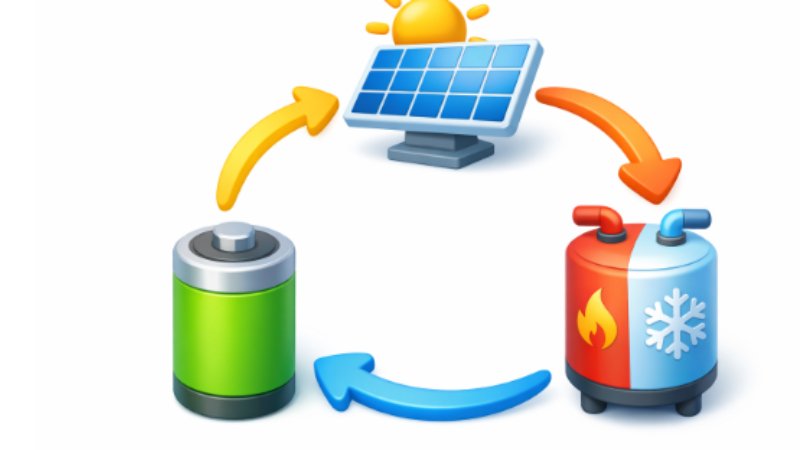
- Advanced materials are crucial for improving the performance and sustainability of renewable energy systems.
- Innovations in battery technology, such as self-assembling electrolytes, are enhancing recyclability and efficiency.
- New solar materials are enabling the production of ultrathin, lightweight, and flexible solar panels.
- Advancements in thermal energy storage are addressing the challenges of effectively storing renewable energy.
- Artificial intelligence is accelerating the discovery of materials that can replace scarce resources in energy storage.
Table of Contents
- Battery Innovations: Enhancing Efficiency and Recyclability
- Next-Generation Solar Materials: Ultralight and Flexible Panels
- Advancements in Thermal Energy Storage
- AI-Driven Material Discovery for Energy Storage
- Conclusion
The global push for clean energy is driving innovation in materials science, making renewable energy more efficient, scalable, and cost-effective than ever. These advancements are not limited to one area; they span battery development, solar panel materials, and thermal storage solutions. Breakthroughs in materials design are reshaping how we store, convert, and use renewable energy, and the results are already being felt across industries and in daily life. For example, advancements in solar energy materials are enabling lighter, more versatile solar panels and more sustainable energy storage options, which are essential to meeting tomorrow’s clean energy goals.
With nations focusing on low-carbon energy, demand for renewables rises, but challenges like energy storage, recycling, and efficiency remain. Research institutes seek advanced materials to reshape energy and environment. New materials enhance solar panels and batteries, tackling scalability, recyclability, and infrastructure integration, supported by regulation and investment for a cleaner future. These innovations not only improve tech but promote circular, resource-efficient industries by addressing recycling and performance. MIT and Stanford research exemplify progress, providing adaptable blueprints for a changing global landscape.
Battery Innovations: Enhancing Efficiency and Recyclability
The transition to electric vehicles and grid-scale storage requires batteries that are not only efficient but also sustainable in their life cycle. One of the main obstacles for battery-powered devices is the growing challenge of electronic waste as the number of retired batteries increases globally. Researchers at MIT have pioneered a new self-assembling electrolyte that can dismantle itself at the end of a battery’s life. This breakthrough design simplifies the recovery of vital materials during recycling and minimizes the risk of hazardous waste, helping build a closed-loop system for battery manufacturing and use. By making battery components more recyclable, the industry can reduce supply chain pressures and make electric vehicles more environmentally friendly.
This approach highlights a broader trend in the energy sector: designing for recyclability from the outset. Governments and private sector partners are increasingly supporting such projects in anticipation of stricter environmental standards and higher consumer expectations for cleaner products. As detailed in a Scientific American article on battery recyclability, these shifts will be essential for scaling renewable transportation and energy storage worldwide.
Next-Generation Solar Materials: Ultralight and Flexible Panels
Solar technology has undergone a remarkable transformation in recent years, driven by advances in materials. Innovations such as transition metal dichalcogenides (TMDs) enable the development of solar panels that are not only thinner and lighter than silicon-based panels but also flexible enough for a variety of uses. TMDs efficiently absorb sunlight, potentially revolutionizing wearable electronics and enabling solar power on curved surfaces and in remote environments where traditional panels are impractical. Stanford University researchers are at the forefront of these developments, working to commercialize ultrathin solar sheets for new, versatile applications.
Advancements in Thermal Energy Storage
Storing renewable energy efficiently is challenging, especially for wind and solar, which are intermittent. Recent advances feature materials that combine thermochemical, sensible, and latent heat into a “trimodal” system, enabling more consistent and efficient energy dispatch. This innovation helps renewables serve as a reliable grid backbone and industrial power source, even without sunlight or wind. Trimodal storage bridges the gap between fluctuating generation and steady demand, boosting system resilience. These thermal storage breakthroughs make clean energy more practical at scale, allowing greater flexibility, maximizing investments, and reducing reliance on fossil fuels.
AI-Driven Material Discovery for Energy Storage
Artificial intelligence accelerates material discovery for energy storage, with NJIT using AI to screen candidates for porous materials in multivalent-ion batteries—more sustainable alternatives to lithium-ion. AI speeds up the discovery of materials with suitable properties by simulating their real-world behavior, saving years of research and reducing trial-and-error. This fosters collaboration among scientists and engineers, enabling a new “materials by design” era. The process aims to produce powerful, eco-friendly batteries, reducing resource and geopolitical issues.
Conclusion
Advanced materials are at the center of the clean energy revolution. Each technological leap, whether in batteries, solar cells, or energy storage, brings us closer to a sustainable future where renewable power is accessible and affordable for all. Continued investment in materials science, collaborative research, and the deployment of breakthroughs will be crucial to overcoming current barriers and realizing the full promise of renewable energy. As the field evolves, it will drive further innovation and support a global transition to cleaner, more resilient energy systems.