Key Takeaways
- Evaluate the full cost of ownership, not just the asking price.
- Inspect systems, records, permits, and property rights before removing contingencies.
- Visit the location at different times to assess privacy, traffic, access, and noise.
- Review insurance availability and closing documents early in the process.
- Use qualified local professionals for complex property questions.
Luxury real estate decisions should be based on more than architecture, finishes, or a coveted address. A home can look flawless during a showing while still carrying expensive maintenance needs, insurance complications, title restrictions, or location-specific concerns that affect everyday living and future resale. Local knowledge can make a meaningful difference when comparing high-value properties. Beverly Hills, CA, real estate agent Josh Flagg offers a website featuring luxury listings, notable transactions, neighborhood information, and buyer and seller services across Beverly Hills and surrounding Los Angeles markets, including Bel Air, Holmby Hills, Malibu, and Pacific Palisades. Josh Flagg’s experience with distinctive residential properties makes his platform a useful example of the street-level market familiarity buyers should seek from an advisor.
Look Beyond the Asking Price
The purchase price is only the starting point. Build an annual ownership budget that includes property taxes, insurance, utilities, landscaping, pool care, security, association dues, staffing, and a reserve for capital repairs. A newly renovated kitchen may add appeal, but it does not eliminate the need for a roof replacement, drainage correction, electrical upgrade, or HVAC equipment replacement due to aging.
- List fixed annual costs, including taxes and association fees.
- Estimate recurring service costs for exterior and specialty systems.
- Set aside a repair reserve for major mechanical or structural work.
Study the Location at Street Level
A prestigious neighborhood name does not make every parcel equal. Visit during morning traffic, evening hours, and weekends. Observe parking, deliveries, construction activity, road access, drainage patterns, neighboring windows, and nearby gathering spaces. A smaller house with a usable lot, reliable access, privacy, and protected views may be a stronger long-term choice than a larger home in a compromised position.
Inspect the Home’s Core Systems
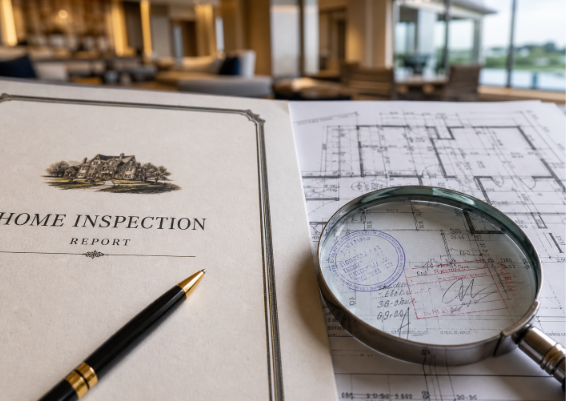
A showing is not an inspection. Schedule a general inspection early, then bring in specialists when the property warrants deeper review. The Consumer Financial Protection Bureau’s home inspection guidance notes the importance of allowing enough time for additional inspections, repairs, or negotiations.
- Roof, drainage, foundation, electrical, plumbing, and HVAC.
- Pest, termite, pool, spa, irrigation, and outdoor kitchen systems.
- Solar, batteries, generators, elevators, gates, and smart-home equipment.
- Environmental or geological review where slope, soil, wildfire, flood, or coastal conditions raise concerns.
Review Permits, Plans, and Past Work
Confirm that additions, guest houses, retaining walls, pools, garages, and major remodels received the necessary approvals and final sign-offs. Compare public records, available plans, and the current layout. Unpermitted work can complicate insurance, financing, resale, and future renovations. Do not rely solely on verbal assurances when a contractor, inspector, architect, or land-use professional can verify the issue.
Check Title, Easements, and Property Rights
Read the preliminary title report carefully. It can reveal liens, recorded easements, shared-driveway terms, private-road obligations, use restrictions, and other encumbrances. When boundaries are unclear, particularly around fences, hedges, landscaped areas, or hillside lots, discuss whether a survey or additional boundary review is appropriate. Title insurance can provide important protection, but buyers should understand the exceptions listed in the policy.
Measure Insurance and Ownership Costs
Request insurance quotes before becoming fully committed to a property. Replacement cost, age, location, wildfire exposure, flood risk, valuable collections, and unusual features can all affect availability and premiums. Ask about deductibles, exclusions, umbrella liability coverage, and whether separate earthquake or flood policies may be needed. Coverage that is limited, costly, or difficult to obtain can materially change the value equation.
Test Privacy, Security, and Daily Comfort
Privacy is a practical feature. Return in daylight and after dark to check sightlines from neighboring homes, street lighting, gate access, camera coverage, delivery zones, and bedroom or pool visibility. Test intercoms, alarms, backup power, and garage access where possible. Also consider emergency routes and the maintenance required to keep gates, landscaping, exterior lighting, and security equipment functioning properly.
Choose the Right Local Real Estate Advisor
Ask prospective advisors about comparable homes, neighborhood-specific resale factors, disclosure practices, and how they coordinate inspectors and specialists. A strong advisor should explain both the appeal and the risks of a property, communicate clearly, and recognize when a question requires expertise in legal, tax, engineering, insurance, or title. Local familiarity matters most when two homes look similar online but differ sharply in access, view protection, lot utility, or buyer demand.
Complete a Calm Final Review
Closing day should not feel rushed. Review inspection reports, repair documentation, title details, insurance binders, financing figures, and the final purchase terms. Complete a final walk-through to confirm that agreed repairs were completed and that fixtures, remotes, keys, and access devices remain. The CFPB’s closing checklist also encourages buyers to compare final loan figures with earlier estimates before signing.
Frequently Asked Questions
How long should a luxury home due diligence take?
Timing depends on contract deadlines, financing, inspection findings, title complexity, and the property itself. A large estate with multiple structures or specialty systems often needs more review than a conventional home.
Can a buyer skip an inspection if the home is new?
No home is automatically free of defects. New construction and recent remodels can still have incomplete work, drainage issues, installation errors, or systems that need specialist review.
What is the biggest luxury home buying mistake?
Letting urgency or presentation replace analysis. The most impressive home can still have costly legal, structural, insurance, operational, or resale issues.
Conclusion
A luxury purchase deserves a disciplined and well-informed process. Beyond impressive architecture and premium finishes, buyers should carefully evaluate the property’s condition, maintenance history, ownership records, ongoing costs, location, privacy, and long-term flexibility. It is equally important to consider resale potential, neighborhood stability, and how the home will support everyday living over time. Taking the time to compare these factors before making an offer can reduce unexpected expenses and provide greater confidence throughout the buying process. A thoughtful evaluation helps ensure the property’s true value extends beyond its appearance, allowing buyers to enjoy their investment with greater peace of mind for years to come.