Okay, so here’s something I probably shouldn’t admit – I used to think home security cameras were a bit much. Like, something rich people did, or overly anxious people. My old apartment had a deadbolt and a nosy landlord who basically watched everyone come and go anyway. That felt like enough.
Then a guy two streets from where I live now got his truck stolen from his own driveway at 10 am. Clear daylight. And the only reason anyone knew what actually happened was that a neighbor happened to have a camera pointed at the street. Without that one camera – owned by someone who wasn’t even the victim – the guy had nothing. No plate, no description, no nothing.
That kind of thing changes how you think.
The Honest Reason Most People Don’t Have Cameras Yet
It’s not that people don’t care about safety. It’s easy to push it to later. You tell yourself you’ll look into it after the holidays, or when work settles down, or once you’ve sorted the bathroom renovation. Security always ends up somewhere on page two of the to-do list.
And honestly, the market doesn’t help. You Google “home security cameras” and you’re immediately drowning in options, brands you’ve never heard of, spec sheets full of numbers that mean nothing without context, and about fourteen different Reddit threads all contradicting each other. Most people close the tab and go back to Netflix.
I understand that completely. But I also know what it feels like to walk through your house after someone else has been in it uninvited. My cousin went through that three years ago. She said the thing that bothered her most wasn’t even the stuff that got taken – it was the feeling that her home didn’t feel like hers anymore. That took a while to shake.
A proper security system for house protection doesn’t undo that feeling once it happens. But it goes a long way toward making sure it doesn’t happen in the first place.
Why Wired Cameras Specifically – And Not Just Whatever’s Cheapest on Amazon
Look, I’m not going to pretend wireless cameras are useless. Some of them are genuinely decent. But there’s a gap between “decent” and “reliable” that matters a lot when you’re talking about security.
Wireless cameras have a dependency problem. They need your Wi-Fi to be up. They need their batteries charged or their power adapter plugged in. They need enough signal strength to actually transmit footage. And they need all three of those things to be working at the same time, at the exact moment something happens at your house.
That’s a lot of conditions.
Wired security cameras don’t have that problem. They’re physically connected – power comes through the cable, footage goes through the cable, and the whole system runs whether your internet is up or not, whether someone drives past with a signal jammer (yes, that’s a real thing people actually do), or whether there’s a power cut to just the outdoor outlet. There’s a reason commercial buildings, schools, hospitals, and government facilities all use hardwired systems. Reliability isn’t optional in those environments.
It shouldn’t be optional at home either, really.
The footage quality is also genuinely better. Not in a barely-noticeable way – in a “you can actually read a license plate at 40 feet” kind of way. Wi-Fi cameras compress footage to manage bandwidth. Wired systems don’t have to make that compromise. When something happens, and you’re trying to get a clear image of a face or a vehicle, that compression difference matters more than you’d think.
The Stuff Nobody Mentions When You’re Buying a Camera System
Here’s what I wish someone had laid out plainly before I started looking into this.
Resolution: 1080p is fine, but 4K is worth it if you’re covering a driveway or any space where you’d need to identify someone from a distance. The price gap has closed enough that there’s not a strong reason to cheap out on this.
Night vision: Most break-ins happen when it’s dark. A camera that produces grainy black-and-white mush at night is barely better than no camera. Infrared is the baseline. Color night vision – which sounds fancy but just means it uses ambient light to show actual color in low-light conditions – is worth having for entry points.
Storage: Wired systems store footage locally, usually on a DVR or NVR unit in your home. This is actually a big deal that gets glossed over. Your footage isn’t on someone else’s cloud server. You’re not paying a monthly subscription to access your own recordings. It’s on your hardware, in your house, and you own it completely. For a lot of people, that’s a privacy win as much as a cost win.
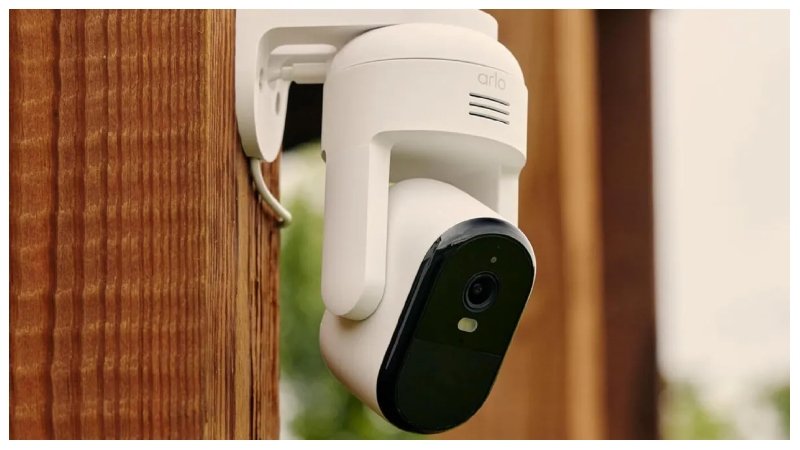
Field of view: The wider the better for most locations. A camera with a narrow angle means you need more cameras to cover the same ground. 100–120 degrees is a solid range. For large outdoor areas, pan-tilt-zoom cameras let you remotely move the camera and zoom in – actually useful, not just a gimmick.
Where to Put Them – Which Is Actually More Important Than Which Camera You Buy
I’ve seen people spend a lot of money on decent cameras and then mount them in positions that make no sense. A camera facing your front garden looks busy, but doesn’t capture anyone approaching the door. A camera mounted too low gets obscured by parked cars. One mounted too high captures a great view of the tops of people’s heads.
Front door is obvious and necessary – aim for 8 to 10 feet high, angled slightly downward to catch face-level detail. Back door gets forgotten a lot, which is exactly why it’s a popular entry point. Same for side gates. If your property has a side access passage and it’s not covered, that’s a gap worth fixing.
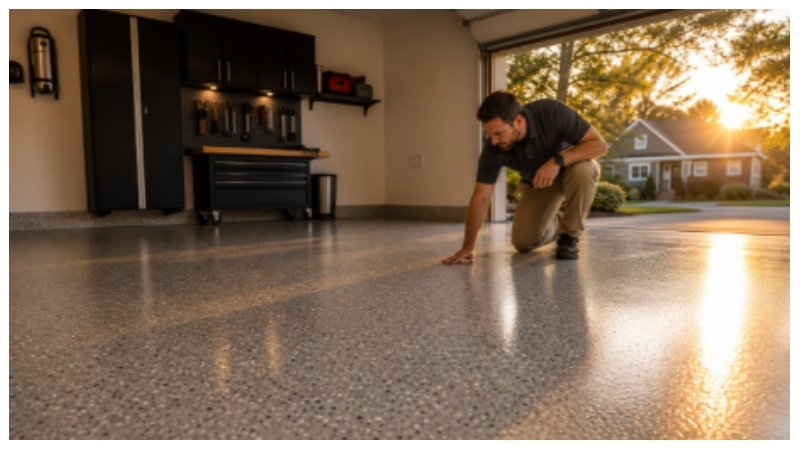
The garage is one thing people consistently underestimate. It’s where expensive tools, bikes, and sometimes a second vehicle live. A lot of garages also connect directly to the main house, which means an unlocked garage door is basically an unlocked house door. Camera coverage there isn’t optional; it’s necessary.
Driveway cameras should be positioned to capture vehicle plates – high enough to get a clear angle but not so high that the geometry works against you. Ground-floor windows that aren’t visible from the street are worth covering. Burglars are specifically looking for low-visibility access points.
When I spoke to the team at Security Center Florida about this, they mentioned that every property they assess turns up blind spots the homeowner didn’t know they had. Almost always, it’s the side access, the corner of the garage, or the back fence line. It’s not stupidity on the homeowner’s part – it’s just that most of us aren’t trained to think spatially about property vulnerability. Professionals are.
About the Installation – Be Honest With Yourself
Wired security cameras are not a Saturday afternoon project unless you genuinely know what you’re doing. You’re running cable through walls and ceilings, drilling through exterior surfaces and properly weatherproofing the penetrations, connecting to power, setting up and configuring a recording unit, and testing everything.
Done right, it’s a solid, long-lasting system. Done badly, it’s a system that looks fine until it quietly fails and you only find out when you go looking for footage that isn’t there.
If you’re comfortable with that kind of work and you’ve done similar stuff before – fine, go for it. But if you’re the kind of person who hires someone for electrical work and plastering, this probably belongs in the same category. The professional installation cost is real, but so is the difference in how the system actually holds up over the years. These systems should last a decade or more. A dodgy DIY install won’t.
What It Costs – And Why the Math Actually Works Out
For most homes with four to eight cameras, professional installation lands somewhere between $1,000 and $3,500. That’s a wide range because it depends on camera spec, property size, and how complex the run is. Click here for more information.
I know that sounds like a lot. But the average loss from a residential burglary is somewhere around $2,600 just in stolen goods – and that number doesn’t include repair costs for forced entry, insurance excess, the time spent dealing with all of it, or the intangible cost of not feeling comfortable in your own house for months afterward.
Wired systems also don’t have the ongoing costs that catch people off guard with wireless setups. No subscription to access recordings, no battery replacement cycle, no hardware refresh every few years because the manufacturer dropped support. It’s largely a one-time cost that runs in the background for years without asking much of you.
Putting It All Together – Cameras as Part of Something Bigger
A camera on its own is useful. A camera that’s part of a connected security system for house protection is significantly more useful.
Motion-triggered floodlights that fire when a camera detects movement at 2 am. An alarm that trips if someone approaches a covered entry point after hours. Live feeds you can pull up on your phone from anywhere. Professional monitoring if you want someone watching things while you sleep or travel. These aren’t paranoid extras – they’re layers, and each layer makes the whole thing more effective.
The goal isn’t to turn your home into a prison. The goal is to make it clearly not worth the effort to anyone who’s looking for an easy target. Most of the time, that’s all it takes.
Right, So – When Are You Actually Going to Do This?
Genuine question. Not rhetorical, not a sales pitch.
Because here’s the thing: everyone knows they should sort their home security. It’s not controversial, it’s not complicated in principle, and most people have been meaning to get around to it for longer than they’d like to admit. The information is out there. The technology is good. The pricing, for what you get, is reasonable.
The only thing standing between most people and a properly secured home is the same thing that stands between most people and most sensible decisions – it hasn’t felt urgent enough yet.
Don’t wait for that to change. The moment it feels urgent, it’s already too late to prevent whatever made it feel that way.
Get it sorted. Do it properly with wired security cameras. And then genuinely forget about it, because a good system runs quietly in the background and lets you get on with your life. That’s the whole point.