
Key Takeaways
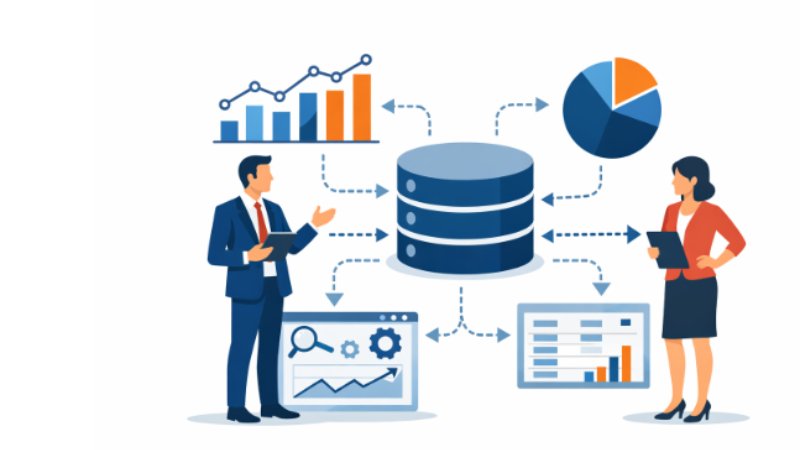
- B2B data provides critical insights that drive informed decision-making.
- Effective data utilization enhances customer segmentation and targeting.
- Integrating data analytics into business processes increases operational efficiency.
- Data-driven strategies foster innovation and competitive advantage.
Table of Contents
- Understanding B2B Data
- Enhancing Customer Segmentation
- Optimizing Operational Efficiency
- Driving Innovation
- Overcoming Challenges in Data Utilization
- Conclusion
In today’s competitive landscape, businesses are leveraging data at unprecedented levels to inform their strategic decisions. Whether it’s understanding market shifts, refining sales tactics, or strengthening customer relationships, actionable insights from B2B data providers influence every aspect of business strategy. Companies that master the art of data-driven decision-making are better equipped to anticipate trends, satisfy customer needs, and outperform competitors.
The ability to extract value from B2B data extends beyond basic analytics or reporting. It is about transforming raw information into tactics and strategies that drive growth, efficiency, and customer satisfaction. The following sections explore how B2B data underpins these strategic moves, from market analysis to innovation initiatives in leading organizations. Business leaders are increasingly investing in robust data strategies as the race to embrace digital transformation accelerates.
Understanding B2B Data
B2B data refers to the digital information exchanged, collected, or purchased between businesses. This data includes transaction histories, company firmographics, digital behaviors, customer feedback, and industry trends. For organizations, B2B data is the groundwork on which strategic decisions are built. It allows leadership and sales teams to analyze recent performance, discover new opportunities, and proactively address risks.
High-quality B2B data is often sourced from diverse platforms, including customer relationship management (CRM) systems, third-party vendors, and digital footprints from websites or social media. Its accuracy and depth can determine the effectiveness of everything from sales prospecting to long-term product planning. Companies use this data to benchmark their growth, assess demand, and respond to evolving market dynamics. For a deeper look at how leading companies are adopting data strategies, refer to recent research by McKinsey & Company.
Enhancing Customer Segmentation
One of the most effective uses of B2B data is refining customer segmentation. By analyzing firmographic details (such as industry, revenue, or company size), purchase histories, and engagement behavior, businesses can group clients into distinctive segments. This enables sales and marketing teams to develop highly targeted campaigns and deliver relevant content that speaks to each group’s challenges and goals.
Advanced analytics and machine learning further refine segmentation by identifying hidden patterns or predicting future client behavior. Segmentation also helps prioritize high-value leads, reduce customer churn, and allocate resources more effectively. As personalization becomes central to B2B relationships, segmentation fueled by meaningful data is essential for lasting customer satisfaction and loyalty.
Optimizing Operational Efficiency
Business process optimization is another major benefit of integrating analytics into daily operations. By closely examining data from the supply chain, purchasing, or customer service workflows, companies can uncover inefficiencies that drive up costs or slow down delivery times. For example, reviewing supplier reliability and product return rates leads to better inventory management or supplier negotiations.
Data-driven process improvements are evident in areas such as demand forecasting, logistics management, and workforce allocation. Operational efficiency, enabled by evidence-based decisions, translates into cost savings and a more agile response to market changes. According to a McKinsey & Company report, data analytics has helped businesses reduce operational costs by up to 15 percent while improving service levels.
Driving Innovation
Data is not just about refining existing operations. It also guides businesses toward the next wave of innovation. By analyzing trends in customer feedback, industry benchmarks, and emerging market needs, leaders can identify gaps for new products or services. This preemptive approach enables companies to avoid stagnation and remain relevant in ever-changing markets.
Innovative organizations often use predictive analytics to simulate outcomes of new ideas or business models before making major investments. This reduces risk and enhances agility, allowing for rapid prototyping and market testing. In today’s digital-first world, competitive advantage increasingly depends on how effectively an organization turns insights into forward-thinking solutions, rather than simply reacting to competitors.
Overcoming Challenges in Data Utilization
Despite the advantages, businesses often encounter distinct challenges when working with B2B data. Issues include data quality, slow integration with existing systems, and concerns over security or privacy regulations. Poor data quality can misinform decision-makers and undermine trust in analytics-driven processes. To resolve this, organizations must establish robust data governance practices and prioritize verification.
Integration complexities can be addressed by investing in scalable IT infrastructure and specialized software that streamlines data transformation. Underpinning everything, data security and compliance frameworks ensure customer and partner information is handled responsibly. Continued staff training and vendor vetting are also critical to reducing risks in increasingly interconnected digital ecosystems.
Conclusion
Effectively leveraging B2B data is no longer a competitive differentiator, but a necessity for modern decision-making. From precise customer segmentation and optimized operations to innovative product development, businesses that value and manage their data assets are positioned for sustainable growth. As industries digitize and competition intensifies, strategic data utilization empowers companies to lead rather than follow, offering enduring value to customers and stakeholders.